GaN Charger vs Normal Charger explained. Compare charging speed, size, efficiency, heat, safety, price, and benefits to choose the right charger.
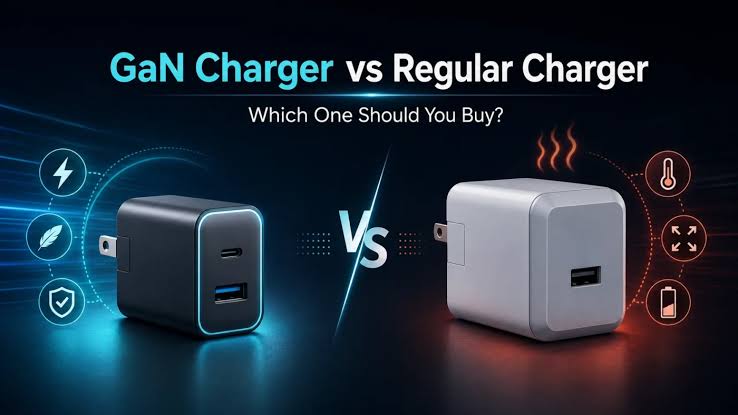
Table of Contents
Introduction
Chargers have changed significantly in recent years. Traditional chargers are still widely used, but GaN chargers have become increasingly popular because they can deliver high power in a smaller and lighter design.
But is a GaN charger actually better than a normal charger?
The answer depends on how you use your devices. If you want a compact charger for your smartphone, tablet, laptop, or multiple devices, a GaN charger can be an excellent option. For simple everyday charging, however, a conventional charger may still be sufficient.
In this guide, we’ll compare GaN Charger vs Normal Charger based on size, charging speed, efficiency, heat, safety, price, portability, and practical use.
What Is a GaN Charger?
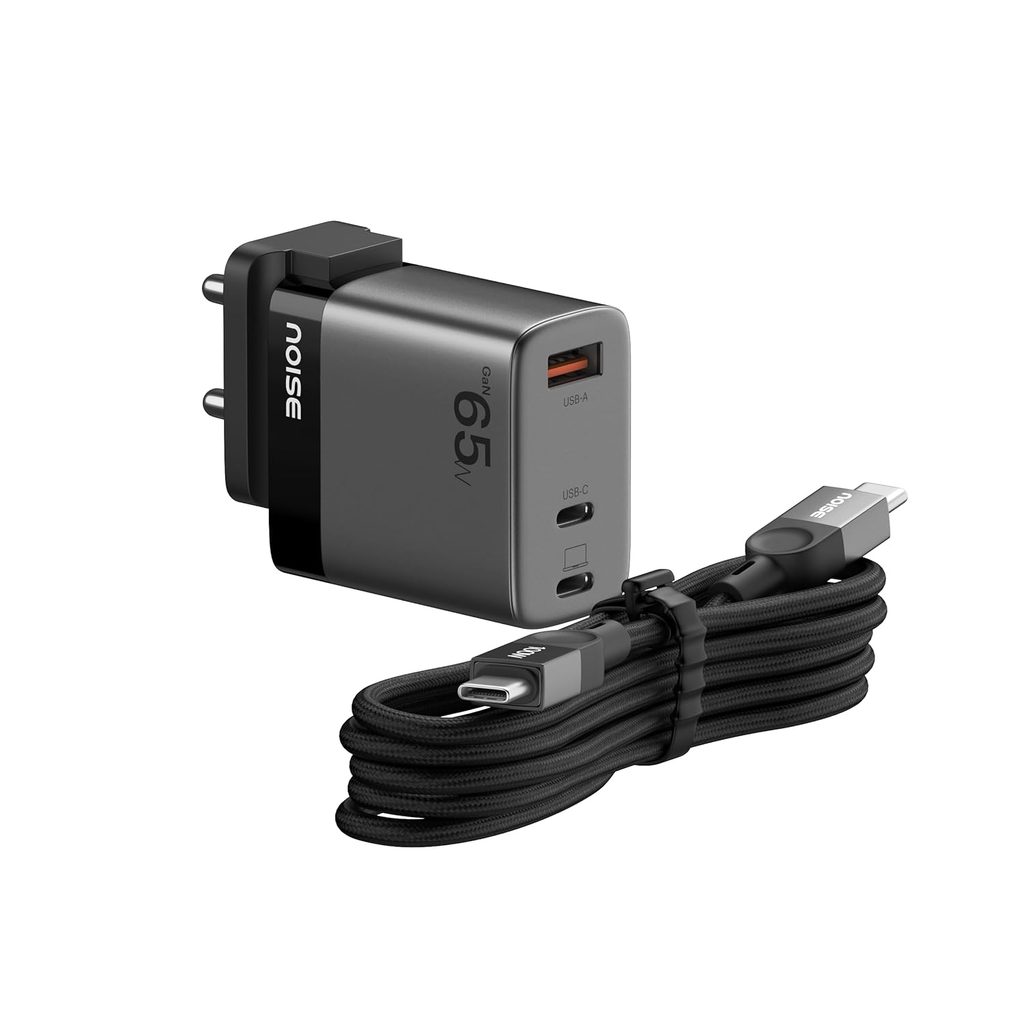
GaN stands for Gallium Nitride, a semiconductor material used in modern power electronics.
Traditional chargers commonly use silicon-based components. GaN technology allows charger manufacturers to build smaller and more efficient power adapters while supporting relatively high power output.
For example, a compact GaN charger may provide enough power to charge a smartphone, tablet, wireless earbuds, and even some laptops, depending on its wattage and supported charging standards.
Key benefits of GaN chargers
- Compact design
- Lightweight construction
- High power output
- Better efficiency
- Good heat management
- Multiple charging ports on some models
- Convenient for travel
What Is a Normal Charger?
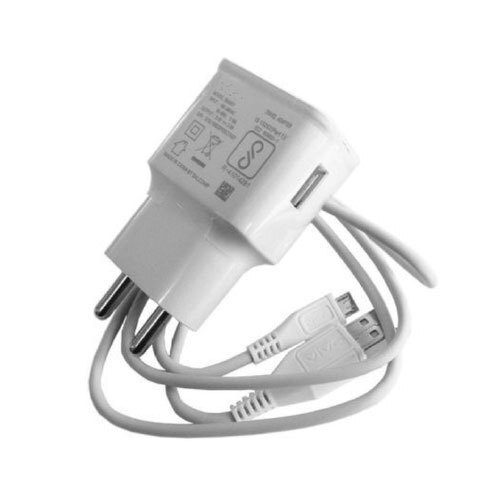
A normal or traditional charger generally uses conventional silicon-based power electronics to convert AC electricity into the DC power required by electronic devices.
Traditional chargers have been around for many years and remain popular because they are affordable, widely available, and suitable for everyday charging.
However, when manufacturers need to provide higher power in a compact form, GaN technology can offer advantages.
GaN Charger vs Normal Charger: Key Differences
| Feature | GaN Charger | Normal Charger |
|---|---|---|
| Technology | Gallium Nitride | Usually silicon-based |
| Size | Generally smaller | Generally larger at comparable higher power |
| Weight | Usually lighter | Can be heavier |
| Efficiency | Generally higher | Generally lower at comparable designs |
| Heat | Often better managed | Can generate more heat |
| Power | Available in high-wattage models | Available in many power levels |
| Multiple ports | Common in modern models | Depends on model |
| Portability | Excellent | Depends on size |
| Price | Usually higher | Often cheaper |
| Best for | Multiple/high-power devices | Basic charging |
Important: Actual performance depends on the specific charger design, power rating, charging protocol, and device compatibility.
1. Size and Portability
One of the biggest advantages of GaN chargers is their compact size.
Traditional chargers can become relatively large when designed to deliver higher power. GaN technology allows manufacturers to design high-power chargers in smaller packages.
This makes GaN chargers particularly useful for:
- Travelers
- Students
- Business professionals
- Laptop users
- People carrying multiple devices
If you regularly carry a charger in your backpack, the smaller size can make a noticeable difference.
2. Charging Speed
Does GaN automatically mean faster charging?
No.
This is an important point.
GaN technology itself doesn’t automatically make a charger faster. Charging speed depends on several factors, including:
- Charger wattage
- USB Power Delivery support
- PPS support
- Device compatibility
- Charging cable
- Manufacturer’s charging technology
For example, a 65W GaN charger can provide high power, but a smartphone that only supports 25W charging won’t suddenly charge at 65W.
So when comparing chargers, don’t look only at the word GaN. Check the actual power output and charging standards.
3. Efficiency
Efficiency is another major reason manufacturers use GaN technology.
A more efficient charger can reduce energy losses during power conversion. This can also help manufacturers create smaller charging adapters capable of handling higher power.
However, the exact efficiency varies between models.
Therefore, don’t assume every GaN charger is automatically more efficient than every traditional charger. The charger’s design and components also matter.
4. Heat Generation
Chargers can become warm during operation, particularly when delivering high power.
GaN technology can improve power-conversion efficiency, which may help reduce energy lost as heat.
But GaN chargers can still get warm.
Temperature depends on:
- Charging power
- Charger design
- Ambient temperature
- Number of devices connected
- Load on each port
- Internal thermal management
A good-quality charger should include appropriate safety and thermal protections.
5. Multiple Device Charging
Modern users often carry several devices.
For example:
- Smartphone
- Laptop
- Smartwatch
- Wireless earbuds
- Tablet
A multi-port GaN charger can potentially replace several individual charging adapters.
A 65W, 100W, or higher-power multi-port charger may be useful for people who want to charge several compatible devices from one adapter.
However, remember that total power is shared between ports on many multi-port chargers.
6. GaN Charger vs Normal Charger: Price
Traditional chargers are generally more affordable.
GaN chargers often cost more because they use newer power electronics and may offer:
- Higher power
- Smaller designs
- Multiple ports
- USB-C Power Delivery
- Advanced charging features
If you only need to charge a basic smartphone, an inexpensive traditional charger may be enough.
But if you want one compact charger for multiple devices, paying more for a good GaN charger can make sense.
Is a GaN Charger Safe?
Yes, a properly designed and certified GaN charger can be safe to use.
However, safety depends on the complete charger design—not simply on the fact that it uses GaN technology.
Look for chargers with appropriate protection features such as:
- Over-voltage protection
- Over-current protection
- Over-temperature protection
- Short-circuit protection
- Power regulation
Most importantly, purchase chargers from reputable manufacturers and reliable retailers.
Avoid extremely cheap chargers from unknown sources, especially when charging expensive smartphones and laptops.
Does a GaN Charger Damage Your Phone Battery?
No, using a GaN charger does not inherently damage your phone battery.
The phone and charger communicate through supported charging protocols to determine how much power should be delivered.
However, battery longevity can be affected by factors such as:
- Excessive heat
- Charging habits
- Battery age
- Device design
- Charging technology
Using a high-wattage charger doesn’t mean your phone will automatically receive that maximum wattage.
For example, if your phone supports a lower charging power, it should only draw the power it is designed to accept.
Who Should Buy a GaN Charger?
A GaN charger is particularly useful if you:
Travel frequently
One compact charger can potentially replace several adapters.
Use a laptop and smartphone
A higher-power GaN charger may be able to charge both, depending on compatibility and power requirements.
Carry multiple gadgets
Multi-port GaN chargers can reduce cable and adapter clutter.
Want a compact charger
GaN technology is useful when you want high power without carrying a large adapter.
Work remotely
A single charger can simplify your travel or work setup.
Who Should Buy a GaN Charger?
A GaN charger is particularly useful if you:
Travel frequently
One compact charger can potentially replace several adapters.
Use a laptop and smartphone
A higher-power GaN charger may be able to charge both, depending on compatibility and power requirements.
Carry multiple gadgets
Multi-port GaN chargers can reduce cable and adapter clutter.
Want a compact charger
GaN technology is useful when you want high power without carrying a large adapter.
Work remotely
A single charger can simplify your travel or work setup.
How to Choose the Right GaN Charger
Before buying a GaN charger, consider these factors.
1. Check the wattage
Common options include:
- 20W–30W: Smartphones and small devices
- 45W–65W: Smartphones, tablets and many laptops
- 100W+: Higher-power laptops and multiple devices
Always check your device’s supported charging power.
2. Look for USB-C PD
USB Power Delivery (USB PD) is an important standard for modern USB-C charging.
If you’re buying a modern charger, check whether it supports the charging standard your devices require.
3. Check PPS support
Some smartphones benefit from Programmable Power Supply (PPS) support.
If your phone specifically requires or benefits from PPS, make sure the charger supports it.
4. Check the number of ports
Think about how many devices you normally charge.
A single-port charger may be enough for a smartphone, while a multi-port charger can be more useful for a laptop, phone and accessories.
5. Check safety features
Choose a charger with appropriate protection systems and buy from a reputable manufacturer.
GaN Charger vs Normal Charger: Which Is Better?
So, which is better—GaN or normal charger?
For most users who want a compact, portable and high-power charging solution, a good GaN charger is the better option.
It is especially useful for people who charge multiple devices or need a laptop-capable charger while traveling.
However, a normal charger is still a practical option for users who only need basic charging and want to spend less.
Quick recommendation
Choose GaN if:
You want compact size, high power, portability, or multiple-device charging.
Choose a normal charger if:
You want a simple, affordable charger for basic everyday use.
Frequently Asked Questions
Is a GaN charger better than a normal charger?
GaN chargers generally offer advantages in size, power density and portability. However, the best option depends on your device requirements and budget.
Is GaN charging faster?
Not necessarily. Charging speed depends on the charger’s wattage, supported protocols, cable and the device being charged.
Is a 65W GaN charger good for a phone?
Yes, provided it supports your phone’s charging standards. A phone that supports less than 65W will not necessarily charge at 65W.
Can a GaN charger charge a laptop?
Yes. Many GaN chargers are designed to provide enough power for compatible laptops, particularly models with USB-C charging.
Are GaN chargers safe?
Good-quality GaN chargers with appropriate protection systems are generally safe. Buy from reputable manufacturers and avoid questionable low-quality products.
Does GaN charger consume less electricity?
GaN technology can improve power-conversion efficiency, potentially reducing energy losses. Actual electricity consumption depends on the charger, device and usage.
Does GaN damage battery health?
GaN technology itself does not damage a device battery. Battery health depends on factors such as temperature, charging behavior and battery chemistry.